
Projects
This page contains information on the projects NODUS researchers are part of.
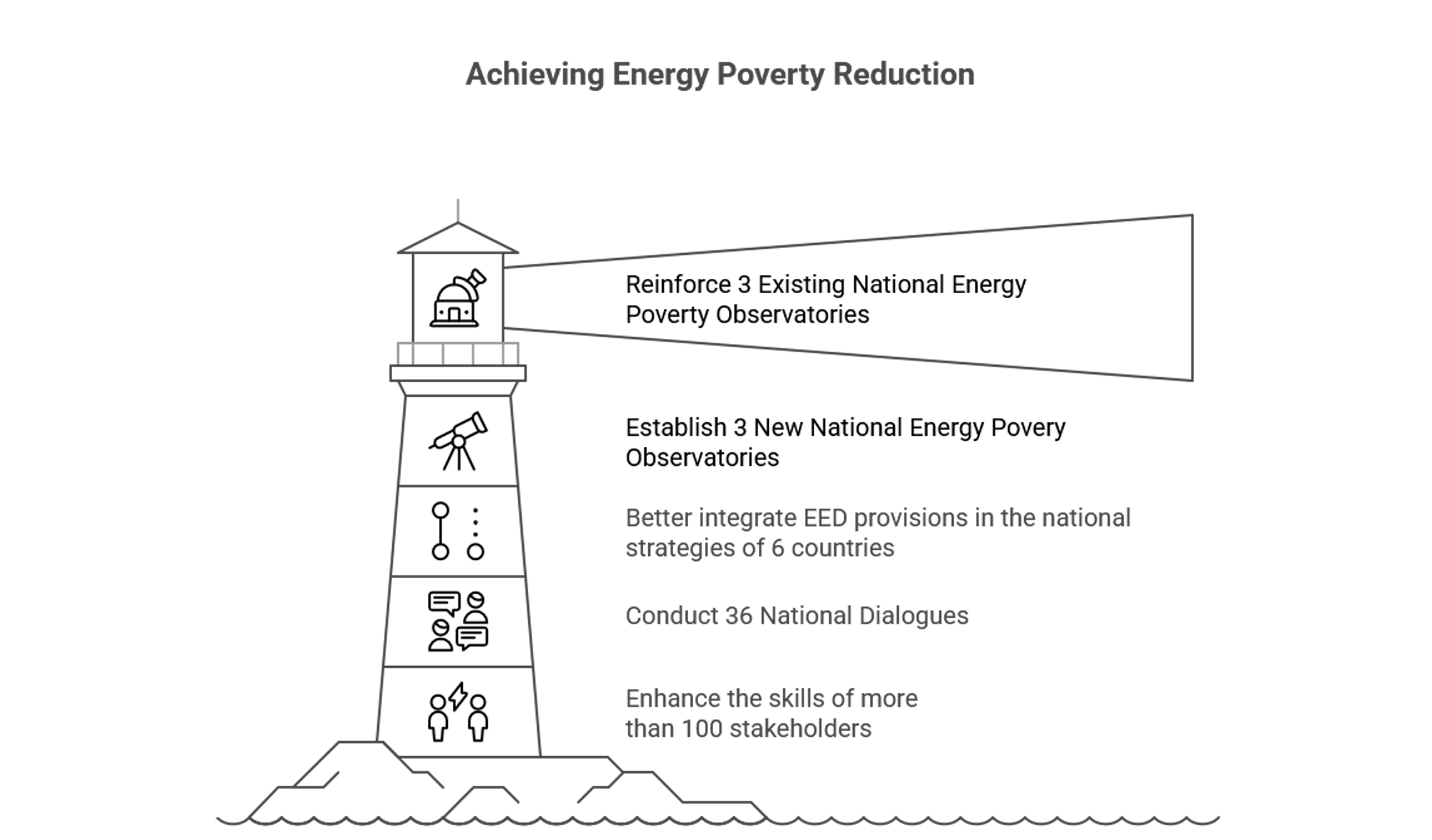
BEACON project (2026–2029)
The BEACON—Building EU Energy Poverty Action through Coordinated National Observatories examines mechanisms for measuring and monitoring energy poverty in Finland and in two other EU countries where energy poverty is not yet systematically monitored. The project’s purpose is to support Member States in implementing the EU Energy Efficiency Directive, addressing future energy and heating challenges, and ensuring a just energy transition.
EP-Nordic (2024–2028)
Saving, shifting or shivering? Mapping and measuring energy poverty in the Nordic countries (EP-Nordic) is an Academy Research Fellowship project of Dr Sini Numminen. The project explores the dynamics and causes of energy poverty in the Nordic countries, where energy poverty has been an understudied phenomenon. The project is funded by the Research Council of Finland.
ROMEO project (2025–2026)
The ROMEO project will develop an interactive role-playing-based method for the assessment of the impacts of sustainability-oriented public procurement and specifying procurement needs. The project will provide public procurers with the ability to implement sustainable, innovative public procurement and utilise new technology in the development of public sector operations. The end result of the project is a process tool that will be made available for public use.

ICOS Cities (2021–2025)
ICOS Cities (a.k.a. PAUL – Pilot Applications In Urban Landscapes) is a large project funded by the EU Horizon 2020 instrument’s Green Deal call. The project focuses on monitoring systems for greenhouse gas emissions (GHG) in densely populated urban areas in the Europe. The role of the NODUS team is to benchmark existing services and to develop new service prototypes for the end users of observational emission data such as city administrators.

NorDark (2021–2024)
NorDark – Unconventional Methods to Inform Sustainable Design: Mediating the Needs of People and Nature in Nordic After-dark Environments (2021–2024) – strives to develop new knowledge crucial to design for sustainability in the urban after-dark. To achieve this aim we bring relevant disciplines together with representatives from design, technology, psychology and ecology.

Carbonwise Jukola (2022–2023)
Carbonwise Jukola project will create and pilot a sustainable and carbonwise learning and operating model for a public mass event. The project will reduce the carbondioxide emissions caused by Porvoo Jukola 2023 event by prioritizing and selecting the key activities and measures that can be most effectively achived by developing the target.

ORSI: Towards Eco-Welfare State: Orchestrating for Systemic Impact (2019–2023)
Towards Eco-Welfare State: Orchestrating for Systemic Impact (ORSI) project is a joint undertaking of Tampere University, the Finnish Environment Institute SYKE, Aalto University and VTT Technical Research Centre of Finland. The project is funded by the Strategic Research Council at the Academy of Finland.

Carbon Neutral Cities Alliance - Biosolids to Biochar (2022)
The Carbon Neutral Cities Alliance (CNCA) is focused on achieving carbon neutrality in leading urban hubs all over the globe. Their mission centres on ambitious environmental targets in GHG reduction and carbon drawdown solutions for the urban environment. The current Biosolids to Biochar project is a collaboration between Aalto University and four CNCA cities, Helsinki, Stockholm, Boulder, and Minneapolis.

NONTOX: Removing Hazardous Substances to Increase Recycling Rates of WEEE, ELV and CDW Plastics (2019-2022)
NONTOX project is developing a combination of technologies to recycle hazardous plastic waste generated from Waste Electrical and Electronics Equipment (WEEE), End of Life Vehicles (ELV) and Construction and Demolition Waste (CDW).
